 Cáo Moments
Home › Blog › Marriage proposal planning
Proposal signal and cue for photographer: how we coordinate
By the Cáo Moments team · 2026-11-01
A proposal signal is a discreet gesture—a hand touch, a phone placement, a nod to a friend in the crowd—that tells your hidden photographer "it's happening now, get ready." At Cáo Moments, we brief the photographer during the venue setup visit: they learn the couple's appearance, the exact spot where the proposal will unfold, and which signals the proposer will give (we agree on 2–3 backup cues in case the first is missed). The photographer stays 15–30 metres away, shoots silently on a silent shutter, and moves only when signalled. Timing is crucial: a delayed signal or a photographer in the wrong angle loses the ring reveal, the first kiss, the tears. We also prepare contingency shots—the couple's arrival, the decorated space, the cake table—so if the moment signal fails, the proposal still has professional images. For international couples in Vietnam, clear communication happens over WhatsApp before the day: we send maps, emoji breakdowns of signals, a rehearsal call if needed, and we assign a planner to stand near the photographer as a relay point.
A proposal photo is a chain of decisions: where the photographer hides, when they move, what angle captures the ring and emotion together. Most couples want the shot to feel natural—as if the photographer just happened to be there—but luck doesn't scale. We choreograph it.
What hand signal works best for a hidden photographer?
The clearest signals are the ones the proposer already plans to make. If he's going to reach for the ring, that's the signal—the photographer sees the hand move toward the pocket and knows the moment is 5 seconds away. If she's guiding him to a specific spot, the photographer watches for the moment he drops to one knee. A text message sent by a bridesmaid ("He's about to ask") is reliable but slow; by the time the photographer reads it, the kiss has already happened.
We favour physical cues over digital ones: a hand placed on a table edge, a specific word spoken ("I have a question"), a shift in body position. The proposer doesn't need to do anything unnatural. If he's nervous and keeps touching his collar, that's a valid signal—we just brief the photographer to recognize it.
One angle we see work repeatedly: a trusted friend in the crowd (not obvious as a wedding party member) stands near the photographer and watches the proposer. When the friend sees the proposer reach into his pocket, the friend nods to the photographer. This adds 1–2 seconds of reaction time and removes the burden of the proposer remembering to signal while emotional.
The signal must be visible in poor light. If the proposal is at sunset on a rooftop with a river view, shadows move fast. We choose signals the photographer can catch even if the sun dips suddenly: a raised hand, a change in standing posture, a flash of the ring box itself.
How do we prevent the photographer from being spotted?
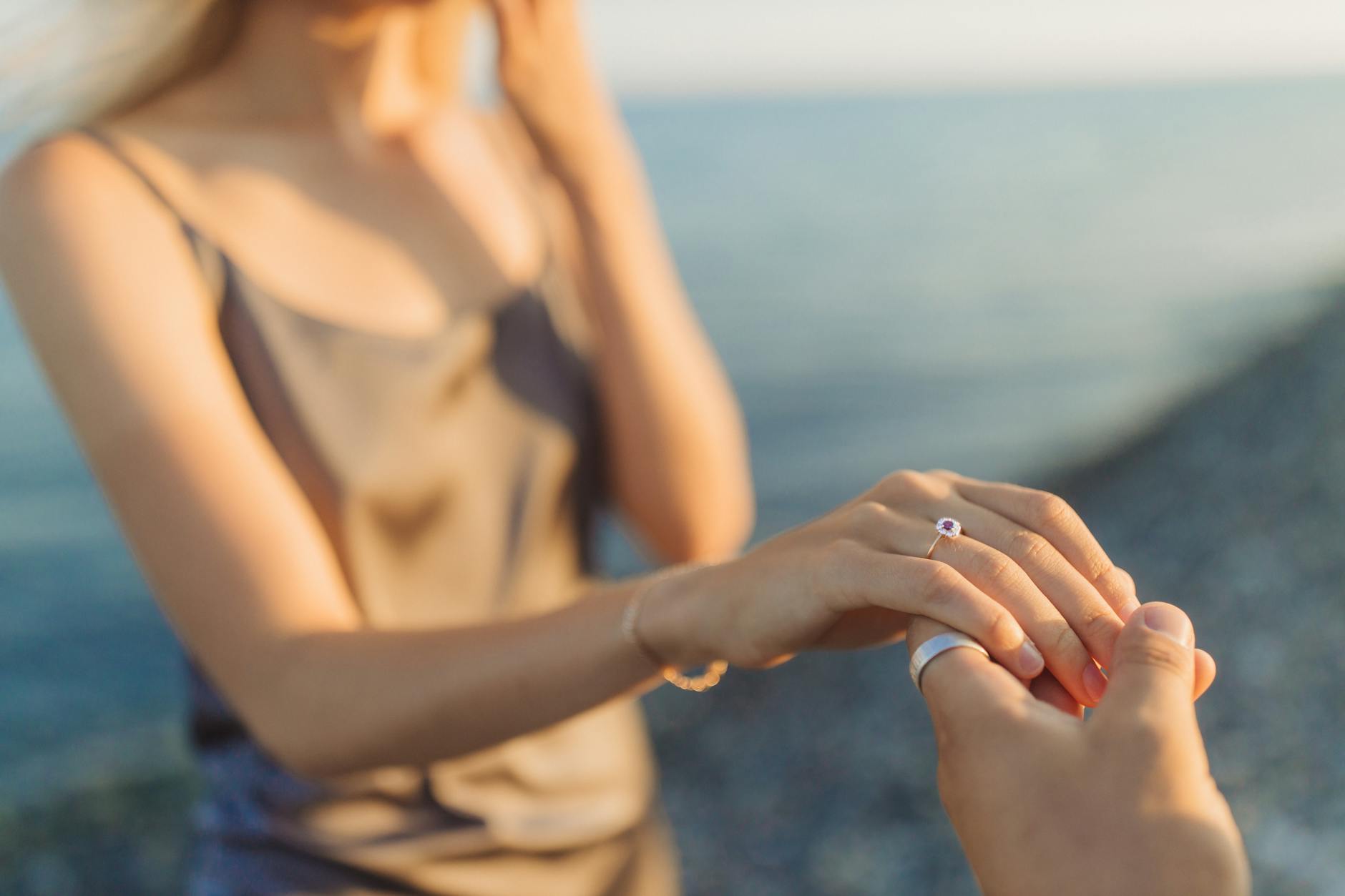
Couples fear the moment is ruined if the proposer or guests spot the camera. We keep the photographer in one of three zones: behind the couple (shooting over a shoulder or through a gap in the decor), at a 45-degree angle with a long lens, or across a large space (courtyard, garden) where the camera looks like part of the ambient noise of the venue.
Before the day, we scout the exact location—whether it's a boutique hotel suite, a private villa garden, or a scenic overlook—and we identify sight lines. We test the photographer's position with the proposer absent: a friend stands where the proposal will happen, and the photographer frames the shot. If the friend can see the camera, we move it.
Timing helps too. The photographer arrives only after the couple and guests are seated or distracted. On the day itself, the photographer doesn't move until the signal. A stationary camera across a room blends into the space; a moving lens catches eyes.
We also brief the photographer to stay silent on the day. No adjusting tripods, no phone notifications, no coughs. The moment the signal is given, the photographer shoots for 45–90 seconds in burst mode (we want 200+ frames so the couple can choose later), then steps back.
For venues with hidden photographer access, such as a hotel with a rear courtyard door, we position the photographer outside until the signal, then they slip in discreetly.
What happens if the signal is missed or delayed?
We always have a second and third signal. The proposer knows: "If I forget the first signal, I'll look toward the friend. If that doesn't work, I'll hold up the ring box." The photographer and planner also agree on a time-based backup: if 10 minutes pass without a signal after the couple has entered the space, the photographer assumes the proposal is about to happen and begins shooting anyway.
We've also seen proposers forget we're coming—they don't signal because they're too nervous. On the day, our planner stands near the photographer and watches the couple's body language. When the proposer's hand moves toward his pocket, our planner nods to the photographer. This is our safest fallback.
Rain, wind, or technical issues can delay the proposal. If a boutique hotel suite is booked for 3 p.m. but the couple arrives 20 minutes late, the photographer's position might shift (a window that was lit at 3 p.m. is now in shadow). We build in 30 minutes of buffer time and the photographer scouts the new light before the couple arrives.
How do we coordinate signals across multiple locations?
Some proposals span two venues: a sunset walk leads to a private dinner setup where the ring is presented. We use staggered signals for this. The first photographer (on the walk) is briefed to shoot the proposal itself. A second photographer covers the couple's arrival at the dinner venue and their reaction when they see the custom cake and decorated table.
Both photographers receive a group WhatsApp message 15 minutes before the proposal: "Couple is now 5 minutes away. First signal will be a hand on her back. Second signal (at the dinner venue) is him turning to gesture to the table." This keeps everyone on the same timeline.
We also use a relay: our planner is the "eyes" for the first photographer, the photographers are the "eyes" for the second venue planner, and all three are in a group chat. If the first proposal runs 10 minutes late, the message goes to the dinner venue planner immediately so the second photographer adjusts the light and repositions.

What backup images should we capture if the signal fails?
Even when the signal works perfectly, we over-document. While the main photographer is shooting the proposal itself, we brief them to also capture:
- Arrival and waiting: The couple entering the venue, walking toward the setup, the moment before they see the decorated space.
- The setup itself: The flowers, candles, cake, any personal details. These shots become context.
- Guest reactions: If family or friends are present, candid shots of their faces when the ring appears. Often these are as emotional as the couple's.
- The moments after: The first kiss, the hug, the couple looking at each other, the ring on her finger.
If the main signal fails and the photographer misses the actual proposal, these surrounding images still create a coherent story. A couple shown walking into a beautifully decorated space, then hugging, then showing off a ring to guests—that's a complete narrative even without the exact moment of the ask.
We prepare the photographer to shoot for 2–3 minutes continuously after any potential signal, not just 30 seconds. Proposals often unfold slower than people expect: there's a moment of silence, a question, a pause before the "yes."
How do we keep the proposal secret while briefing the photographer?
The photographer is usually told the date, time, and location 1–2 weeks before, but not the proposer's identity or the exact couple's appearance until 48 hours before. We send photos of the couple over WhatsApp (usually a candid photo from social media that the proposer provides), a map of the venue with the proposal zone marked, and a written breakdown of the signals.
The photographer signs a simple confidentiality note: they don't discuss the proposal with venue staff, other clients, or social media until the couple gives permission.
For proposals where the couple has a public profile or the proposal is at a famous public spot (Hoan Kiem Lake, a temple, a busy beach), we tell the photographer to move fast and blend in—no studio setup, no obvious equipment. A mirrorless camera with a quiet shutter is better than a DSLR with a loud mirror slap. We brief them to look like a tourist, not a professional.
If the proposal is at a private venue, we're more relaxed: we coordinate with the venue's event manager beforehand, so staff know a photographer will be there and they protect the secret too.
| Scenario | Signal Type | Photographer Setup | Backup Plan |
|---|---|---|---|
| Intimate dinner, 2 people | Hand on table | 5 metres away, behind couple | Text message from proposer to planner |
| Garden proposal, guests present | Nod from friend | 15 metres, 45° angle | Planner relays signal via hand gesture |
| Rooftop at sunset | Pocket reach (ring box) | 20 metres, behind a pillar | Time-based (photographer shoots after 10 min of couple arrival) |
| Beach or public space | Spoken word ("I have something") | 30+ metres, long lens | Secondary photographer disguised as guest |
| Two-venue (walk + dinner) | Hand on back, then table gesture | First photographer on walk; second at dinner venue | Staggered WhatsApp updates to both photographers |
Chat with a planner on WhatsApp
What to check before you book a photographer for a proposal
- Shutter sound: Ask if their camera has a silent mode. A loud shutter can spoil the moment.
- Light conditions: Share the venue and time of day. A photographer who specializes in bright outdoor work might struggle at sunset indoors.
- Signal agreement: Confirm the photographer understands 2–3 backup signals and can spot them without being told again on the day.
- Arrival time: The photographer should arrive 30–45 minutes before the couple to scout light, test positions, and clear their mind. A rushed photographer misses moments.
- Contingency shots: Ask whether they'll shoot arrival, setup, and after-moment images even if the main signal fails.
When we coordinate a proposal, we link the photographer's briefing directly to the overall proposal plan—timing, venue setup, flowers and decor, custom cake placement. The photographer isn't a standalone vendor; they're part of the choreography. A moment that looks candid takes planning.
FAQ
What if the photographer misses the exact moment the ring is revealed?
We prioritize arrival and post-proposal shots so the couple still has professional images of the full story. If only the moment is missed, the couple often says the surrounding shots feel more authentic anyway because the photographer was farther away.
Can the proposer wear something specific to help the photographer spot them in a crowd?
Yes. A bright jacket, a hat, or a distinctive watch makes it easier for the photographer to track the proposer's hand movements. We brief the photographer on this detail when briefing them on the couple's appearance.
How many frames does the photographer typically shoot during a proposal?
We ask photographers to shoot in burst mode for 45–90 seconds, which yields 150–250 frames. From that set, the couple usually gets 30–50 keepers (sharp, well-composed, showing different moments).
Should we tell guests a photographer is hidden, or keep it a surprise?
We usually tell close family members beforehand so they're not distracted looking for a camera. For other guests, the photographer's presence is a pleasant surprise after the proposal.
What if it rains and the proposal moves to a backup indoor location?
The photographer is briefed on both locations and studies light in each one before the day. We send updated maps and signal plans over WhatsApp if a change happens, ideally 2 hours before the couple arrives.
Chat with a planner
Tell us the city, the date and the kind of moment. A planner replies on WhatsApp in English with ideas and what is possible.
FAQ
What if the photographer misses the exact moment the ring is revealed?
We prioritize arrival and post-proposal shots so the couple still has professional images of the full story. If only the moment is missed, the couple often says the surrounding shots feel more authentic anyway because the photographer was farther away.
Can the proposer wear something specific to help the photographer spot them in a crowd?
Yes. A bright jacket, a hat, or a distinctive watch makes it easier for the photographer to track the proposer's hand movements. We brief the photographer on this detail when briefing them on the couple's appearance.
How many frames does the photographer typically shoot during a proposal?
We ask photographers to shoot in burst mode for 45–90 seconds, which yields 150–250 frames. From that set, the couple usually gets 30–50 keepers (sharp, well-composed, showing different moments).
Should we tell guests a photographer is hidden, or keep it a surprise?
We usually tell close family members beforehand so they're not distracted looking for a camera. For other guests, the photographer's presence is a pleasant surprise after the proposal.
What if it rains and the proposal moves to a backup indoor location?
The photographer is briefed on both locations and studies light in each one before the day. We send updated maps and signal plans over WhatsApp if a change happens, ideally 2 hours before the couple arrives.
More like this
Marriage proposal planning
Best Places for Surprise Proposal in Da Lat: A Planner's Guide
Da Lat's misty highlands and romantic architecture make it Vietnam's premier proposal destination. We share exactly where couples say yes, what to book first, and how we choreograph the surprise from start to finish.
Marriage proposal planning
Best Places for Surprise Proposal in Ninh Binh: Hidden Gems & Planning Tips
Ninh Binh's dramatic landscape—limestone peaks, river valleys, and ancient temples—creates natural proposal venues. We help couples choose the right spot, manage weather, and coordinate every detail so you focus on the moment.
Marriage proposal planning
Best Places for Surprise Proposal in Ha Long Bay
Ha Long Bay offers dramatic limestone backdrops and private water settings ideal for proposals. We reveal the best locations, timing, and how to orchestrate a flawless moment with professional coordination.