 Cáo Moments
Home › Blog › Private romantic dinners
How to Plan a Rooftop Dinner in Vietnam: Complete Guide
By the Cáo Moments team · 2026-11-01
A rooftop dinner in Vietnam is an open-air meal on a high-rise terrace, usually at sunset or evening, with the city or water visible below. Best season is October to April (dry, cool). Planning takes 6–12 weeks; essentials include a venue with rain shelter or cancellation options, custom floral arrangement, bespoke cake, ambient lighting, and ideally a hidden photographer. Cáo Moments coordinates all pieces—catering liaison, decor setup, timing—via WhatsApp so the moment feels seamless and secret. Cost varies by guest count, location and add-ons; ask us for a quote on WhatsApp. Biggest risks: monsoon rains, city power cuts (rare but planned for), and the surprise being spoiled—we use coded messaging and day-of confirmations to keep it tight. Chat with a planner on WhatsApp
What Makes a Rooftop Venue Work for Your Moment?
A rooftop works when it has unobstructed views, a covered section (for rain backup), and reliable service access. We look for terraces in city centers with river or mountain sight lines, or quieter settings with skyline depth. The best ones let us rig subtle lighting without damaging the structure, and have a kitchen or catering partner nearby. Some rooftops close in the wet season (May–September); confirm this early. Narrow staircases, exposed edges, and glare from sunset can complicate hidden photography—we scout those beforehand. A rooftop that feels private—not a public bar—is essential for keeping the surprise and the moment yours alone. That's why we partner with boutique venues, not high-traffic hotel terraces, whenever possible.

When Is the Right Season to Book?
October through April is ideal: temperatures are 15–25°C, humidity drops, and rain is rare. November and December are peak—clear skies, cool evenings, but more bookings. January–March offer similar weather with fewer crowds. May–September is the monsoon belt; afternoon rains are common and unpredictable. If your heart is set on summer, we build a robust indoor fallback plan and price accordingly. We also check the lunar calendar—some couples prefer full-moon evenings (brighter for photos, more romantic symbolism). Ask yourself: do you want shoulder-season flexibility, or is peak-season certainty worth the earlier booking deadline? We help decide based on your date and location.
How Do You Keep the Secret Safe Until the Night?
We use a coded WhatsApp thread separate from any couple messages. The surprise-aware partner talks to us; we never contact the other directly. We ask the venue to treat the booking as private (not a proposal, not an anniversary—just a "private dinner"). Florists and cake makers get a generic "celebration order," no details. The photographer arrives 30 minutes early, dressed casual, with a small camera bag. On the day, we send the surprise-aware partner a final checklist at noon, not earlier. The biggest leak? The other person overhearing a phone call or spotting a WhatsApp screen. We recommend the surprise partner take the call in a quiet space, and set message previews off. If the couple lives together, we sometimes suggest a cover story ("work dinner," "friend's gathering") so the other person dresses up naturally. Honesty matters here—we ask upfront if keeping a secret is realistic for your relationship.
What's the Real Timeline from Booking to Sunset?
We work backward from your date. Here's a typical rooftop dinner timeline:
12 weeks before: Confirm season, draft date, check venue availability.
10 weeks: Book venue, secure rain backup plan in writing.
8 weeks: Order custom cake, reserve florist for fresh arrangement.
6 weeks: Lock in photographer/videographer, brief them on hidden approach.
4 weeks: Design decor mood (candles, table linens, lighting scheme), finalize catering menu.
2 weeks: Confirm all vendor counts, delivery times, electrical needs with the venue.
1 week: Confirm weather forecast, brief surprise-aware partner on final logistics.
Day of: Decor crew arrives 3–4 hours before; photographer 30 min before; final walk-through 15 min before arrival.
Evening: Guest arrives, moments unfold, photographer captures candid shots, cake is revealed at a planned moment (often dessert).
This timeline assumes a 2–4 person intimate dinner. Larger groups (6–15 people) add 2–4 weeks and more coordination. We always build a 48-hour contingency window—if weather looks severe, we can sometimes shift to the next evening if both venue and vendors agree.
How Do You Handle Rain and Weather Surprises?
Rain is the biggest rooftop risk. We always secure a backup plan in writing: either a covered section of the same rooftop, a hotel suite with a city view, or a nearby indoor venue with similar ambiance. We confirm this with the venue at booking, not the day before. If rain is forecast 48 hours ahead, we alert the surprise-aware partner and discuss options. Sometimes we shift to the next clear evening; sometimes we embrace the rain (moody lighting, dramatic storm backdrop for photos). Humidity and heat in warm seasons can wilt flowers—we brief the florist to use sturdy blooms (roses, orchids, celosia) and keep arrangements in a cool spot until the last moment. Power cuts are rare but real in some neighborhoods; we ask venues about backup generators. Wind can blow out candles and mess with decor—we use low, wide holders and secure linens with hidden weights. We've never canceled a moment because of weather; we've always adapted.
What Flowers, Cake and Decor Actually Work on a Rooftop?
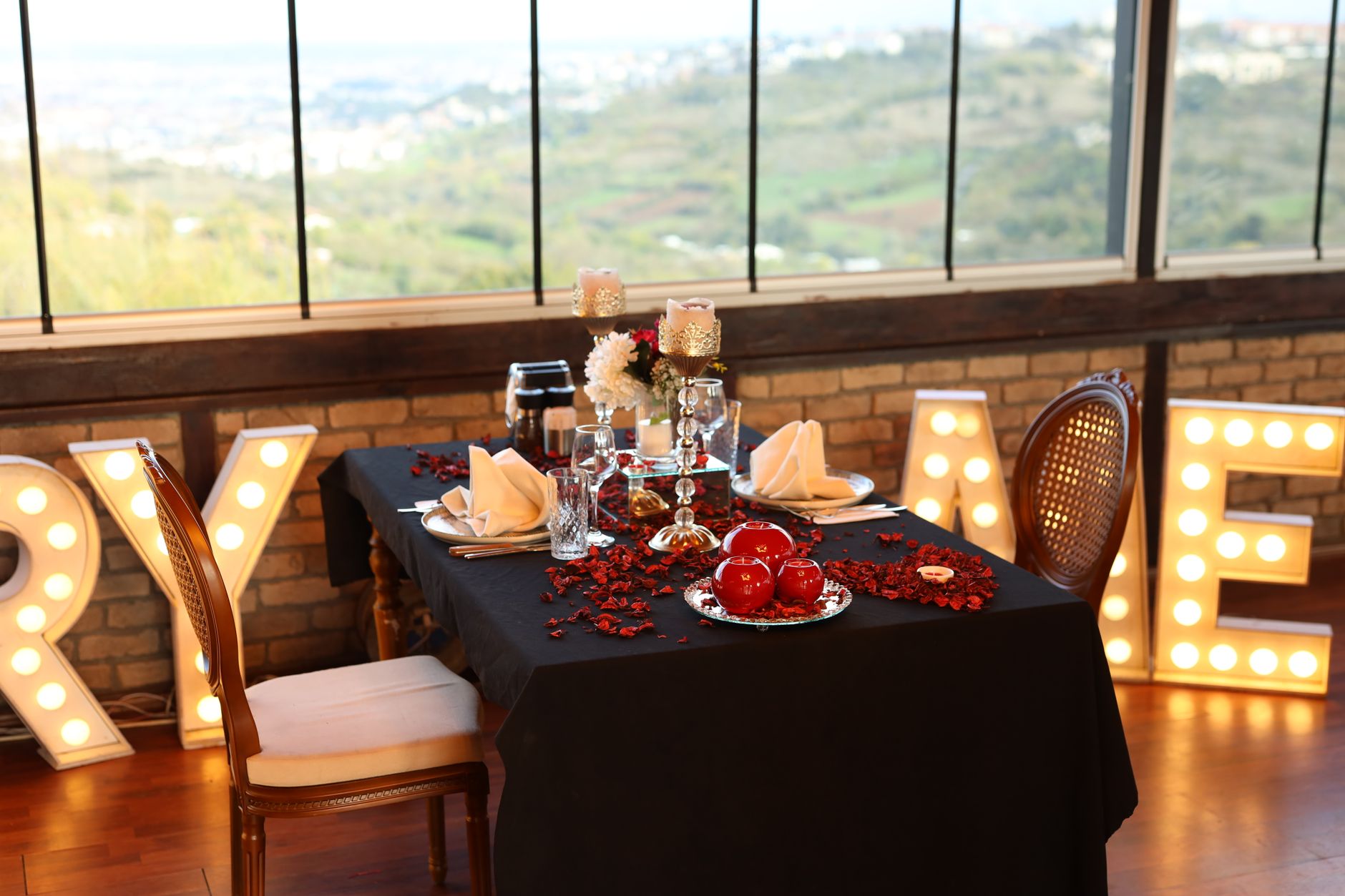
Custom floral arrangements matter most. We avoid peonies and soft blooms that bruise in transport; we use garden roses, orchids, dahlias, and greenery that lasts 6+ hours in open air. A single tall arrangement on the table, or a low garland along the edge, keeps sightlines open. Floating blooms in low bowls work beautifully for intimate tables. A custom cake designed for the two of you—with a flavor that suits the meal, a design that matches the mood, and sturdy structure for outdoor transport—is a moment on its own. We work with bakers who understand humidity and temperature; a buttercream cake in 28°C heat is a risk; we prefer fondant or a mousse-based design. Decor on a rooftop is subtle: soft string lights (if the venue allows), pillar candles in hurricanes, linen table runners, subtle signage. Less is more—the view is your backdrop. We avoid balloons (wind risk) and heavy installations (structural limits). A simple setup costs less, moves faster, and feels more intimate. The biggest win? Timing the lighting: sunset for arrival, candlelight as it gets dark, and the cake revealed under warm glow.
| Element | Why It Works | What to Avoid |
|---|---|---|
| Orchids, roses, dahlias | 6+ hours in heat, no wilting | Peonies, tuberose (fragile, quick decay) |
| Fondant or mousse cake | Stable in humidity, transport-proof | Buttercream in hot season (melts, sweats) |
| String lights on battens | Secure, look romantic, no damage | Balloons (wind), heavy structures (structural stress) |
| Single tall or low arrangement | Open sightlines, dramatic impact | Multiple small bouquets (cluttered, tips over) |
| Pillar candles in hurricane glass | Wind-proof, safe, warm light | Tapers (blow out), citronella (acrid smell) |
Chat with a planner on WhatsApp
How Does a Hidden Photographer Capture the Real Moment?
A hidden photographer or videographer arrives before the guest of honor and finds a discreet position—behind a planter, on an adjacent level, or in a shadowed corner. We brief them on the exact moment we're building toward (the proposal, the anniversary toast, the cake reveal) and what light and angles matter most. They shoot in natural light as long as possible; we sometimes place a small reflector (hidden in decor) to catch the last sunset rays. The photographer never approaches or reveals themselves until after the big moment—usually after cake, when the surprise is out. This means 2–3 hours of shooting, but they're capturing genuine reactions: the first kiss, the tears, the laughter. Video adds another layer; a short edit (2–3 minutes) of the full evening feels like a real memory, not a formal record. The trade-off: more coverage means a longer evening and a higher investment. We ask: do you want stills only, or stills + video? Both change the brief.
What Do You Need to Decide Before You Book?
Here's a checklist:
- Guest count: Just the two of you, or 4–15 people? (Affects table size, catering, timeline.)
- Occasion: Proposal, anniversary, elopement vow renewal, or a "just because" celebration? (Changes the emotional arc and decor tone.)
- Surprise level: Does one person know everything, or is it a mutual surprise? (Affects messaging, logistics, outfit planning.)
- Photography: Stills, video, or both? (Budget and outcome shift.)
- Dietary needs: Allergies, vegetarian, religious restrictions? (Brief the caterer early.)
- Music: Curated playlist, live musician, or silence? (Mood, noise, logistics.)
- Rain plan: Do you shift the date, or embrace an indoor backup? (Affects venue choice.)
- Budget scope: Decor, flowers, cake, photo, coordination—what's essential vs. nice-to-have? (Ask us for a quote on WhatsApp.)
- Timing: Sunset arrival, or a full evening starting earlier? (Light, energy, and catering all change.)
Once you've answered these, the real planning unfolds. We shape each detail around your answers—not a template, but a moment that fits you.
What Actually Goes Wrong, and How We Fix It?
Vendor miscommunication. Florist thinks it's a wedding (over-designs), caterer shows up late, or the photographer gets the wrong address. We solve this: we confirm every detail with every vendor 48 hours before, and the surprise-aware partner has a master checklist (and our phone number) for day-of emergencies.
Weather flip. You booked October and monsoon rains surprise you. We've scouted a backup venue, so we move fast—often the same day.
The guest arrives early. The surprise-aware partner texted the wrong time, or traffic was light. We keep the photographer hidden and stall the moment—a champagne toast, a walk around the roof, a delayed table setup—anything to buy 15 minutes.
Flowers wilt faster than expected. The florist used a bloom that doesn't handle heat. By dinner, it's drooping. We ask the florist to deliver closer to the moment (last 90 minutes instead of 3 hours) and keep arrangements in AC until the last second.
The cake is too delicate to move. The baker and the planner didn't coordinate transport. We've learned: the baker should deliver and plate the cake on-site, not in a box. That costs slightly more but it arrives perfect.
Someone posts on social media before the moment. A friend takes a photo during the surprise. We ask the surprise-aware partner to brief all guests: phones away, photos only after the big moment. Sometimes it still happens—we make peace with it.
Power cut right before sunset. Rare, but backup generators exist for this. We ask venues upfront.
We've seen every hiccup. None are showstoppers. The secret is: plan deep, communicate constantly, and have backup for the backup.
What to Check Before You Book
- Venue rain policy: Is there a covered section, or do they offer a date shift / refund? Get it in writing.
- Catering: Do they handle full dinner, or just cake? Can they work with your dietary needs?
- Electrical: Can the venue safely support string lights, a speaker, or a small heating element (if cold)?
- Structural limits: No heavy installations. How much weight can they support for decor?
- Photography access: Will the photographer be allowed to arrive early and move freely?
- Staffing: Will the venue provide service, or do you hire servers separately?
- Parking & access: Is there easy drop-off for flowers, cake, and decor? How do guests arrive?
- Noise limits: Some rooftops have evening noise curfews. Confirm music volume.
- Booking terms: What's the deposit, cancellation window, and final headcount deadline?
Pages from our team you may need
FAQ
How much does a rooftop dinner in Vietnam cost?
Pricing depends on guest count, location (Hanoi, Saigon, Da Nang, Hoi An—each varies), and add-ons like custom cake, flowers, photography, and decor. Ask us for a quote on WhatsApp with your date and details.
What month is best for a rooftop dinner in Hanoi?
October to March. November–December offer the clearest skies and coolest temps, but book 12 weeks ahead. January–March are less crowded with similar weather.
Can we do a rooftop dinner during monsoon season?
Yes, with a strong backup plan. We secure a covered section or an indoor venue nearby. Rain adds moody lighting but needs a contingency—more coordination, same commitment to your moment.
How hidden can a photographer really be?
Hidden means the guest of honor doesn't see them until after the main moment (proposal, toast, kiss). They position behind decor or on an adjacent level. You'll know they're there after, not before.
What if it rains an hour before our dinner?
We contact you immediately (48 hours before, even more urgently if closer). Options: shift to backup venue same evening, move to next clear night (if both venue and vendors agree), or embrace rain with adjusted lighting. You decide with our input.
Can we bring our own flowers or cake?
Yes, but we recommend our florist and baker partners—they understand humidity, transport, and timing for rooftop setups. If you choose your own, confirm they'll arrive on-time and in perfect condition. We're not liable for outside vendor mishaps, but we'll troubleshoot.
How early should we book a rooftop dinner?
12 weeks for peak season (Nov–Dec), 8 weeks for shoulder season (Jan–Mar, Oct). Last-minute bookings (2–4 weeks) are possible if a venue has availability, but choices narrow and stress rises.
Chat with a planner
Tell us the city, the date and the kind of moment. A planner replies on WhatsApp in English with ideas and what is possible.
FAQ
How much does a rooftop dinner in Vietnam cost?
Pricing depends on guest count, location (Hanoi, Saigon, Da Nang, Hoi An—each varies), and add-ons like custom cake, flowers, photography, and decor. Ask us for a quote on WhatsApp with your date and details.
What month is best for a rooftop dinner in Hanoi?
October to March. November–December offer the clearest skies and coolest temps, but book 12 weeks ahead. January–March are less crowded with similar weather.
Can we do a rooftop dinner during monsoon season?
Yes, with a strong backup plan. We secure a covered section or an indoor venue nearby. Rain adds moody lighting but needs a contingency—more coordination, same commitment to your moment.
How hidden can a photographer really be?
Hidden means the guest of honor doesn't see them until after the main moment (proposal, toast, kiss). They position behind decor or on an adjacent level. You'll know they're there after, not before.
What if it rains an hour before our dinner?
We contact you immediately (48 hours before, even more urgently if closer). Options: shift to backup venue same evening, move to next clear night (if both venue and vendors agree), or embrace rain with adjusted lighting. You decide with our input.
Can we bring our own flowers or cake?
Yes, but we recommend our florist and baker partners—they understand humidity, transport, and timing for rooftop setups. If you choose your own, confirm they'll arrive on-time and in perfect condition. We're not liable for outside vendor mishaps, but we'll troubleshoot.
How early should we book a rooftop dinner?
12 weeks for peak season (Nov–Dec), 8 weeks for shoulder season (Jan–Mar, Oct). Last-minute bookings (2–4 weeks) are possible if a venue has availability, but choices narrow and stress rises.
More like this
Private romantic dinners
Candlelight Dinner with Photographer in Saigon: Plan & Book
A candlelight dinner with a hidden photographer in Saigon means venue, custom lighting, flowers, a plated meal, and a photographer capturing genuine moments without guests noticing—all coordinated by a single planner on WhatsApp.
Private romantic dinners
Candlelight Dinner with Photographer in Hoi An
A candlelit dinner in Hoi An's lantern-lit streets becomes unforgettable when a photographer documents it unseen. We walk you through the setup, the decisions, and what actually happens on the night.
Private romantic dinners
Candlelight dinner with photographer in Hanoi
A candlelight dinner with a hidden photographer lets you relax and be present while we document your real reactions. We handle everything — venue setup, custom decor, floral arrangement, the photographer's timing — so you focus on each other.