 Cáo Moments
Home › Blog › Flowers and bouquets
Flower bouquets in Vietnam for Japanese couples: what works
By the Cáo Moments team · 2026-11-04
Japanese couples in Vietnam can choose from tropical blooms (orchids, anthuriums, bird-of-paradise) that thrive year-round here, plus imported roses and chrysanthemums available in Hanoi and Ho Chi Minh City. Bouquets for proposals or anniversaries typically arrive fresh 2–3 hours before your moment; we coordinate with local growers and florists, manage humidity and temperature during setup, and keep backup stems in case of damage during transport or rain. Cáo Moments sources flowers matched to your color palette and the venue's decor, arrives early to condition and arrange on-site, and works around Vietnam's monsoons (May–October in central regions, June–August in the north). Cost depends on stem count, rarity, and delivery complexity—ask us for a quote on WhatsApp. The key decision: whether you want a local tropical aesthetic (dramatic, bold, fresh-daily feel) or imported blooms (familiar to Japanese guests, higher freshness risk in heat).
Why tropical flowers often work better for Vietnam moments than imported blooms
Japanese couples sometimes assume imported roses are "safer" because they're familiar. In Vietnam's heat and humidity, especially during proposal or dinner setups outdoors, tropical flowers actually outlast roses by hours. Orchids stay crisp for 8+ hours; roses wilt noticeably after 4–5 in direct heat. Local growers here have mastered conditioning orchids, anthuriums, and dendrobiums to hold water and color through a full evening. We choose tropical varieties not for novelty—but because they're reliably fresh and suit Vietnam's climate. A Japanese couple recently wanted imported white roses for their proposal by the water; we suggested local white dendrobiums instead, and they lasted through dinner and photos without a single brown petal. That said, if your heart is set on a particular rose color or peony, we can source it—but we'll be honest about the trade-off: higher cost, tighter timing, and a backup plan in case air freight delays it.
The real choice isn't "tropical vs. imported"—it's what you prioritize: guaranteed freshness and ease (tropical), or a bloom variety that photographs like your home country (imported, with risk).
Chat with a planner on WhatsApp
What blooms are actually in season when you're here?
Vietnam's flower calendar doesn't match Japan's. Orchids, anthuriums, and heliconia are available year-round; peonies and cherry blossoms are not (peonies need winter cooling Vietnam rarely gives). Chrysanthemums and dahlias peak September–November. Roses arrive daily but are grown year-round in cooler highland areas near Da Lat. If you're planning a moment in March or August, expect different palettes than December. Our team checks grower availability 3–4 weeks before your date and shows you real options, not what you hoped would exist. A couple from Tokyo wanted early-summer lilies for their June anniversary; we sourced them from Da Lat's cool greenhouses, but led with local white orchids as the primary option—lilies arrived on time, but one stem showed heat damage, so we had three backup stems in the car. Knowing what season you're visiting is the first decision point, because it shapes the whole bouquet feel and our sourcing strategy.

How does humidity and rain affect a bouquet on your wedding or proposal day?
Vietnam's tropical rains and 85%+ humidity are the invisible enemy of cut flowers. Petals absorb moisture and brown; stems soften and bend; sugar in the water feeds bacteria faster. We manage this by conditioning flowers in a cool, humid room (not air-conditioned—the shock kills them) for 2–3 hours before your moment, adding floral preservative to the water, and protecting the bouquet under a clear acrylic dome or in a sealed box until the last 30 seconds before you see it. On proposal days, the bouquet lives in a cooler bag in the getaway vehicle until 10 minutes before the moment; we brief you on this backstage. For outdoor dinners or ceremonies in high humidity (April–October especially), we choose orchids and anthuriums over delicate spray roses, tape stems with floral tape to reduce water loss, and position the bouquet in a shaded spot during setup—never in direct sun. Rain doesn't ruin a bouquet if it's in our hands; we've run proposals through tropical downpours by keeping it under an umbrella and handing it over only at the exact moment. The couple never knows we diverted twice because of weather. What you avoid: bouquets that sit in open air for hours before your moment, or left in a hot car.
Why do Japanese couples choose specific colors, and how does that shape what we source?
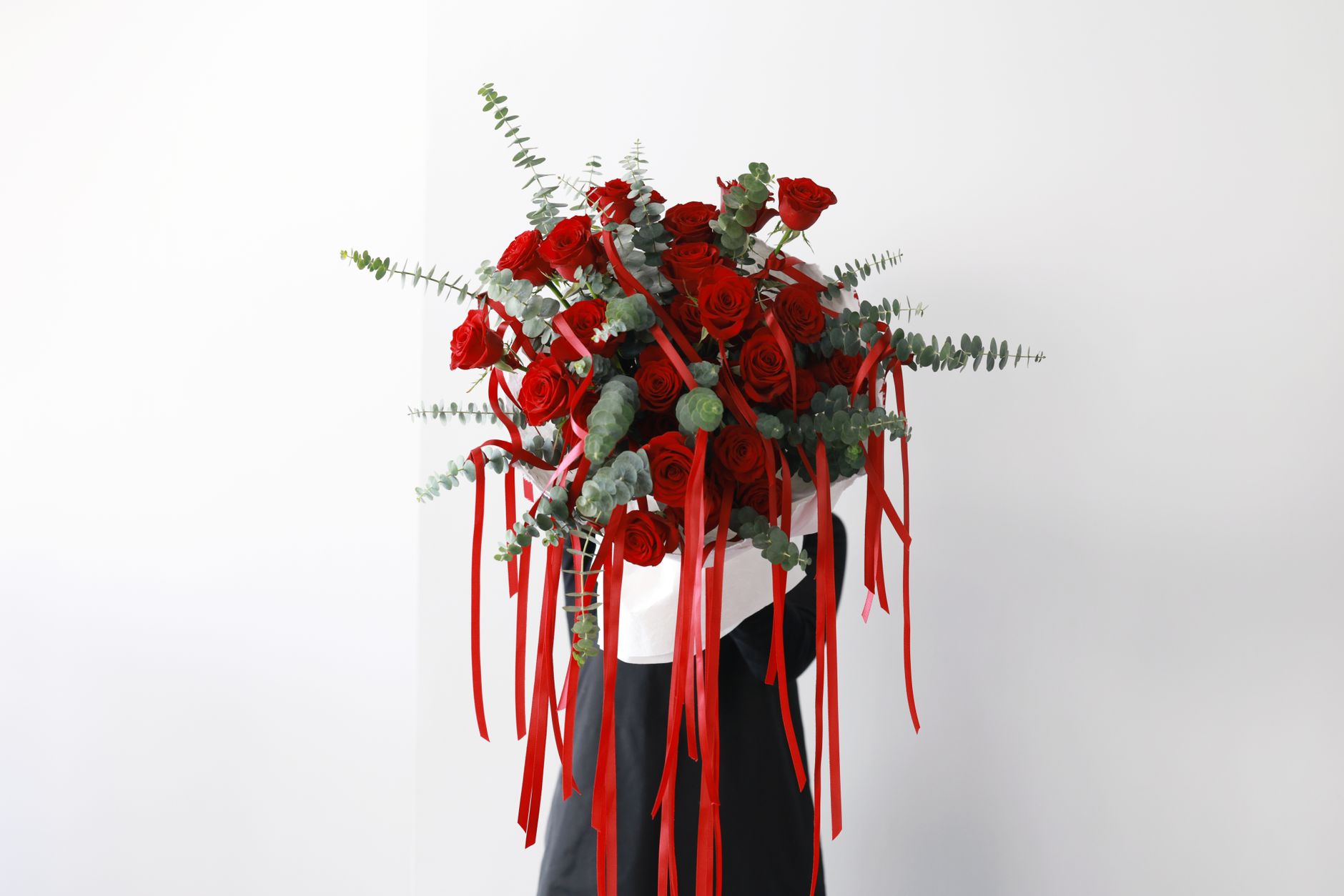
Japanese aesthetics lean toward restraint and symbolism: white orchids for purity and new beginnings (popular for proposals), pink and white together (gratitude and admiration, common for anniversaries), deep reds (passion, less common but requested). We don't assume—we ask. A couple from Kyoto wanted a bouquet that honored both cultures, so we blended white dendrobiums with deep-pink peonies (if in season) and minimalist greenery—nothing crowded. Another wanted a proposal bouquet that felt Vietnamese and respectful to his Japanese fiancée's family; we chose locally grown orchids in cream and blush, arranged in a loose, airy way that felt fresh but elegant. Color choice also affects where we source: deep reds and pinks mean Da Lat-grown dahlias and local dahlias often, because imported versions are pricier and less reliable. Whites and creams are easiest to source year-round. Before we quote you, we ask: What colors do you associate with this moment? Is there a cultural or personal meaning? The answer shapes budget, freshness, and how we coordinate the bouquet with your custom cake, decor, and photographer's shot list. A beautiful bouquet that clashes with your cake or venue lighting is a missed moment.
What's the actual timeline from order to handoff?
We typically work backward from your moment. If your proposal is at 6 p.m., we order flowers 4–5 days prior (giving growers time to cut fresh stems), receive them 48–72 hours before, condition them in a cool room the morning-of, arrange them 2–3 hours before your 6 p.m. moment, and hand them to you (or to a photographer, or to a friend, depending on your plan) exactly when needed. For imported blooms, we add 7–10 days of buffer because air freight is unpredictable—even then, we hold a backup option. Here's where surprises happen: growers run out of a specific shade during peak season (December–January), flowers arrive with a bruise, or humidity causes unexpected wilting. Our response: we check inventory daily and give you 2–3 real options 10 days out, not a single fantasy bouquet. You confirm color, size, and arrangement style 7 days prior. We photograph the finished bouquet 20 minutes before handoff and send it to you (or keep it secret if it's a surprise—the planner holds the phone). This overlap with anniversary, proposal, or elopement planning means the bouquet doesn't live in isolation; it coordinates with your venue, lighting, and timeline. If you're having a romantic dinner and want the bouquet to arrive with dessert, that timing changes everything—flowers live in a cooler longer, so we use heartier stems. Late notice (less than 10 days) is possible but riskier; ask us for a quote on WhatsApp, and be honest about the date.
Tropical, imported, or hybrid—which bouquet style fits your moment?
| Bouquet style | Best for | Freshness in heat | Cost basis | Trade-off |
|---|---|---|---|---|
| Local tropical (orchids, anthuriums, heliconia, local roses) | Outdoor ceremonies, all-day events, proposal moments in warm months | 6–10 hours | Standard (ask for quote) | Less familiar to Japanese guests; bold color |
| Imported roses + local greenery | Indoor moments, air-conditioned venues, photo sessions | 4–6 hours in heat; longer indoors | Higher (import markup) | Requires faster timeline; vulnerable to delays |
| Hybrid (local orchids + imported peonies/lilies; tropical + classic) | Anniversary dinners, elopements, cultural blend moments | 6–8 hours | Mid-range | Sourcing complexity; requires 14+ days' notice |
| Da Lat highland blooms (dahlias, chrysanthemums, cooler-zone roses) | Spring/autumn moments; couples who want Vietnam's best | 7–9 hours | Standard to higher | Not available year-round; limited by season |
Decision framework: If your moment is outdoors in May–September and you're flexible on bloom type, choose tropical—we guarantee freshness. If it's indoors in air-conditioning and you want imported flowers, we can do it—but confirm 14 days out and budget for import costs. If you want both (hybrid), tell us and we'll source it 21 days prior. No style is "wrong"; the match depends on your venue, season, and how long the bouquet needs to stay perfect.
Chat with a planner on WhatsApp
What should you check before confirming your bouquet order?
Checklist:
- Date and season confirmed? (affects availability and cost)
- Venue type—indoors or outdoors? (shapes freshness strategy and stem choice)
- Moment duration? (how long does the bouquet need to stay camera-ready?)
- Color palette locked in? (matches your decor and custom cake?)
- Backup blooms identified? (in case your first choice runs out)
- Allergy considerations? (some orchids trigger reactions; we note this)
- Humidity expectations acknowledged? (you're aware that August bouquets need heartier stems than January?)
- Handoff plan clear? (who holds it, who photographs it, when does it pass to you?)
- Delivery address and timing to the minute? (we need exact venue name, access instructions, phone number on the day)
If you're unsure on any point, we sort it before we order—not the night before. A bouquet is only as good as the moment it arrives in.
What to explore next:
- Browse flower collections to see style options
- Plan your full proposal moment (bouquet + venue + cake + decor + photo)
- Coordinate a romantic dinner with flowers + table setup + music
- Design a honeymoon surprise across Vietnam destinations
Tell us about your moment

FAQ
Can we get Japanese flowers shipped to Vietnam for our moment?
Yes, but it's complex. Cherry blossoms, peonies, and some seasonal Japanese blooms require 10–14 days of import notice, air freight cost, and fragility risk in heat. We source them only if they're truly essential to your vision. Local tropical flowers are fresher, faster, and more reliable. Let's chat about what you're picturing, and we'll be honest about trade-offs.
How much does a bouquet cost?
Cost depends on stem count, bloom rarity, arrangement complexity, and delivery logistics. Tropical local bouquets are more affordable than imported varieties. Ask us for a quote on WhatsApp—we'll show you 2–3 real options at different price points, not a single number.
What if the bouquet wilts before our moment because of heat?
We condition stems in cool water, add floral preservative, protect it in a sealed cooler, and swap out any wilted petals the morning-of. We've never had a visible wilt reach a couple's hands. Backup stems travel with us. If humidity is extreme, we choose heartier orchids over delicate roses. This is why timing and stem choice matter.
Do we order the bouquet separately, or does it coordinate with our decor and cake?
It coordinates. Bouquet color, style, and size shape your table decor and cake design—they're ordered together, not piecemeal. We show you a mood board with all three weeks before your moment. Mismatched flowers and cake are a waste of both.
Can the bouquet be ready the day before, or does it have to be same-day?
Same-day is always better (fresher). If you need it a day early, we can prepare it in a cool, humid environment with water and preservative—but freshness drops slightly. We prefer same-day conditioning and arrangement; it takes 2–3 hours on your day, but the result is noticeably crisper. Night-before is a backup option only.
Chat with a planner
Tell us the city, the date and the kind of moment. A planner replies on WhatsApp in English with ideas and what is possible.
FAQ
Can we get Japanese flowers shipped to Vietnam for our moment?
Yes, but it's complex. Cherry blossoms, peonies, and some seasonal Japanese blooms require 10–14 days of import notice, air freight cost, and fragility risk in heat. We source them only if they're truly essential to your vision. Local tropical flowers are fresher, faster, and more reliable. Let's chat about what you're picturing, and we'll be honest about trade-offs.
How much does a bouquet cost?
Cost depends on stem count, bloom rarity, arrangement complexity, and delivery logistics. Tropical local bouquets are more affordable than imported varieties. Ask us for a quote on WhatsApp—we'll show you 2–3 real options at different price points, not a single number.
What if the bouquet wilts before our moment because of heat?
We condition stems in cool water, add floral preservative, protect it in a sealed cooler, and swap out any wilted petals the morning-of. We've never had a visible wilt reach a couple's hands. Backup stems travel with us. If humidity is extreme, we choose heartier orchids over delicate roses. This is why timing and stem choice matter.
Do we order the bouquet separately, or does it coordinate with our decor and cake?
It coordinates. Bouquet color, style, and size shape your table decor and cake design—they're ordered together, not piecemeal. We show you a mood board with all three weeks before your moment. Mismatched flowers and cake are a waste of both.
Can the bouquet be ready the day before, or does it have to be same-day?
Same-day is always better (fresher). If you need it a day early, we can prepare it in a cool, humid environment with water and preservative—but freshness drops slightly. We prefer same-day conditioning and arrangement; it takes 2–3 hours on your day, but the result is noticeably crisper. Night-before is a backup option only.
More like this
Flowers and bouquets
Flower Delivery Vietnam Reviews: What Real Couples Choose
Flower delivery in Vietnam ranges from corner shop runners to coordinated surprise setups. We share what works, what fails, and how to choose the right florist for your moment.
Flowers and bouquets
Flower Delivery Service in Hoi An: Planning a Moment
Ordering flowers in Hoi An isn't just about delivery—it's about timing them with your whole celebration. We walk you through what to decide before you order, how far in advance to book, and what can go wrong with weather or timing.
Flowers and bouquets
Flower Delivery Service in Hanoi: How to Choose for Your Moment
Flower delivery in Hanoi sounds simple until you're planning a proposal or romantic surprise. We show how a real celebration planner thinks through venue, timing, backup plans, and what makes a delivery land exactly when it matters.